

Space saving furniture for small bedrooms: Unlock Tiny Room Potential

If you're feeling cramped and boxed in by a small bedroom, I get it. The immediate impulse is often to start shopping for smaller furniture, but I'm going to let you in on a little secret I've learned from years of helping people organize their homes: the real magic happens inside your closet.
Mastering your closet organization is hands-down the most impactful thing you can do before you even think about other space saving furniture for small bedrooms.
The Real Secret to a Larger-Feeling Bedroom
Before you pull out the measuring tape for a new dresser or a sleeker bed frame, take a long, hard look inside your closet. For most of us, this is where the biggest stash of untapped potential is hiding. It's a classic mistake to blame the room's limited floor space when an inefficient, overflowing closet is the real villain, pushing clutter out into your living area.
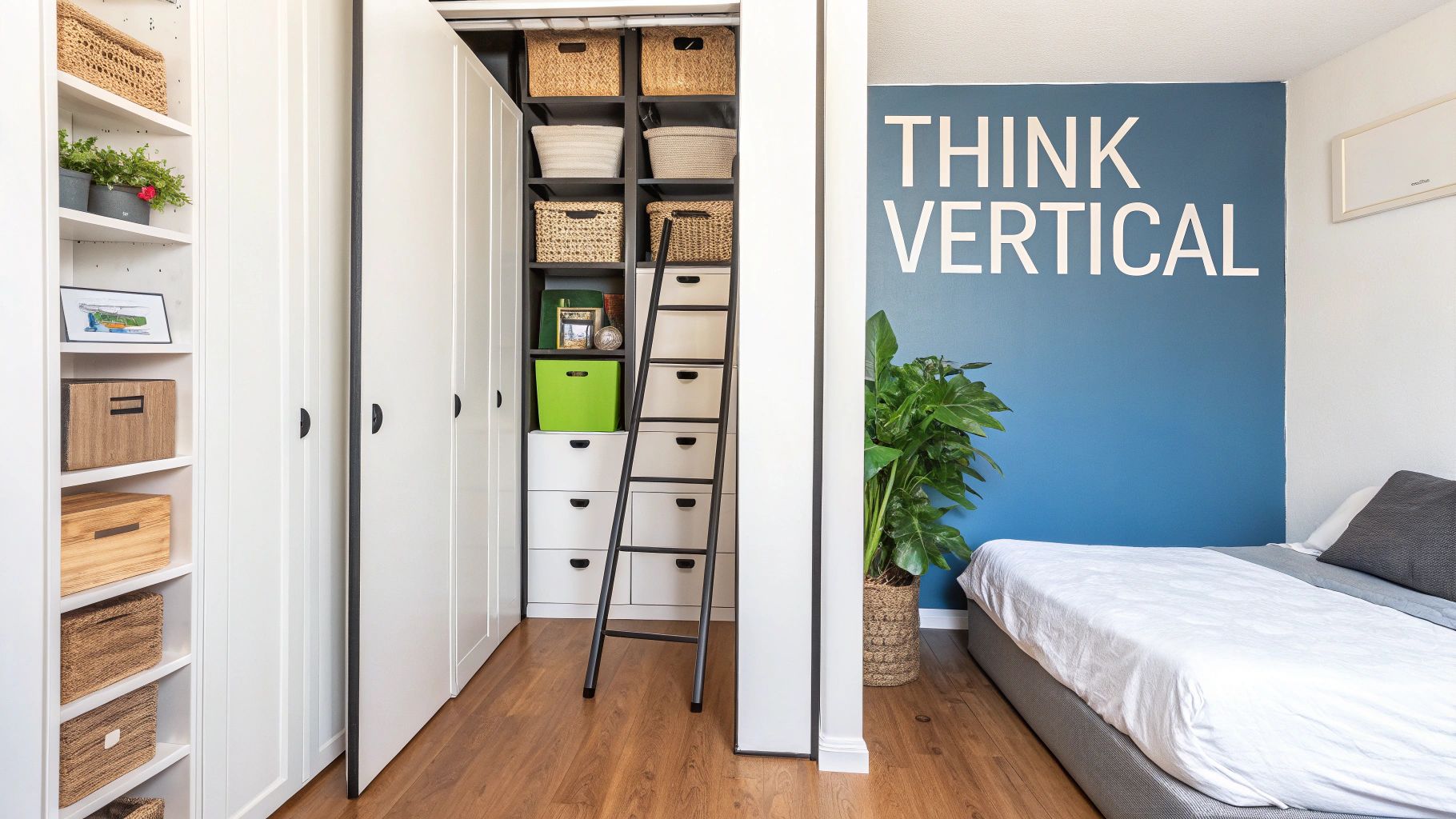
The mindset shift you need is simple but incredibly powerful: stop just "storing stuff" and start "creating functional, vertical space." When you tackle your closet first, you instantly reclaim valuable square footage. This often reduces the need for bulky storage furniture and lays the groundwork for a room that feels genuinely serene and organized.
Why Your Closet Comes First
Think of your closet as the command center for your bedroom's organization. When it's running smoothly, the entire room feels better. A truly well-organized closet can often eliminate the need for a big, clunky dresser, freeing up an entire wall. This isn't just a niche idea; it's a global trend. As more people move into cities, the demand for smart storage has skyrocketed, with the bedroom furniture market projected to hit USD 158.40 billion by 2030. You can read more about the growth of the global bedroom furniture market to see just how big this movement is.
This guide will give you a clear roadmap to transform your closet, focusing on practical strategies that you can see and feel right away. We're going to walk through how to:
- Audit your wardrobe to figure out what you actually need to store.
- Go vertical with clever tools like multi-level hangers.
- Choose smart furniture that works with your newly organized closet, not against it.
The goal is to make your existing space work harder for you. By maximizing every inch within your closet, you create the illusion of a much larger bedroom without knocking down a single wall.
Time for a Ruthless Closet Audit
Before you even think about buying a single piece of space saving furniture for small bedrooms, you have to get real about what you're storing. This means a full-blown closet audit, and I don't just mean making a few "keep" and "donate" piles. This is about understanding what you own, why you own it, and how often you actually use it.
Think of it like gathering intel. You're on a mission to create a true inventory of your wardrobe, and this data will drive every organizational decision you make. If you skip this, you’re just guessing, and you'll probably waste money on organizers that don't solve your real problems.
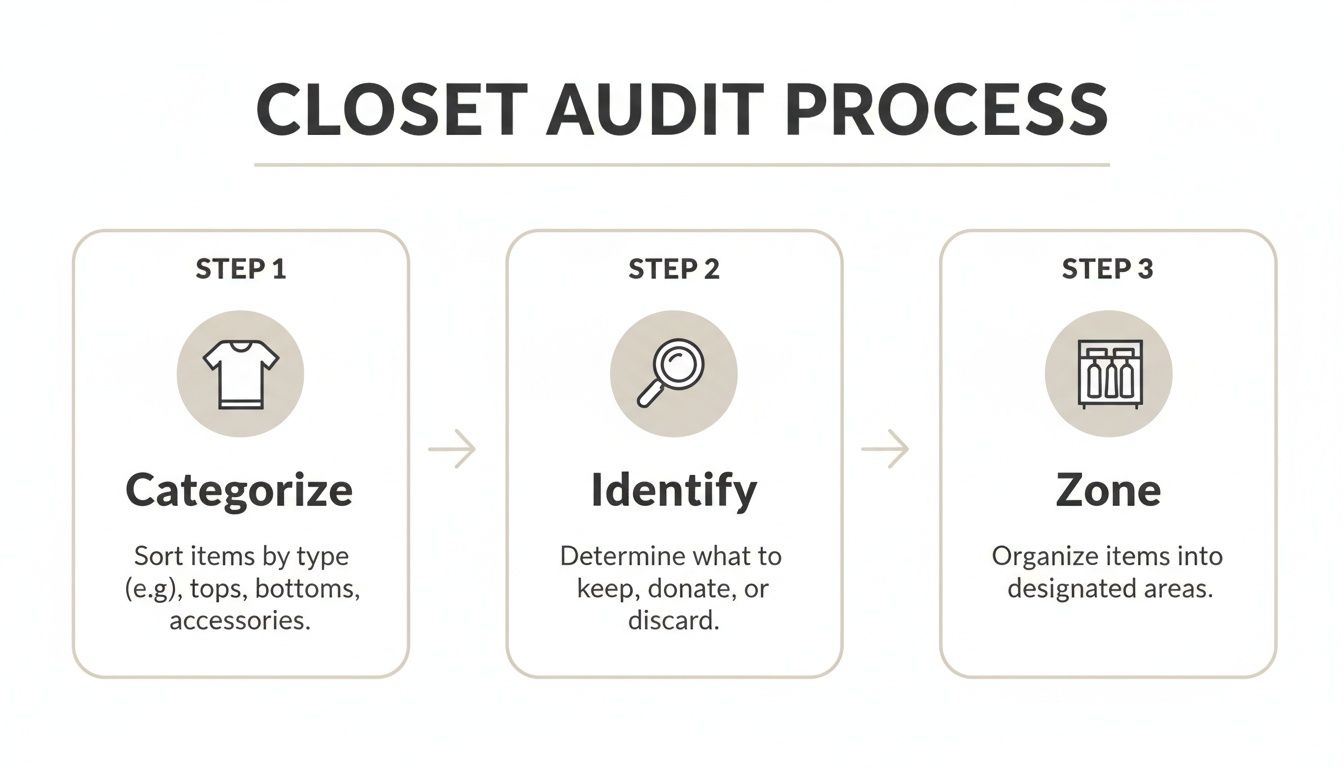
First, Create Categories Based on Your Life
Start by pulling every single item out of your closet. I know, it sounds like a nightmare, but you need to see the mountain to know how to move it. This visual shock is key to understanding the sheer volume you're dealing with.
Once it's all laid out, sort everything into piles based on how you live your life.
- Work Clothes: The stuff you wear to your job, whether it's suits, scrubs, or business-casual tops.
- Everyday & Weekend Gear: This is your life-in-motion pile—jeans, t-shirts, hoodies, and anything you lounge in.
- Special Occasion Outfits: Think wedding guest dresses, cocktail attire, or that suit you wear once a year.
- Workout & Activewear: All your gym shorts, leggings, and sports gear.
This first pass is often an eye-opener. It’s not uncommon to find that a staggering 80% of your wardrobe is casual wear, yet it's usually all crammed in with everything else, making it impossible to find what you need each morning.
Now, Get Honest About How Often You Wear Things
With your piles sorted, it's time for the tough-love part. You need to be brutally honest about how often you actually wear this stuff.
Within each big category, make smaller piles based on frequency: things you wear weekly, monthly, or maybe just a few times a year. This is where the magic happens. You’ll probably find that a huge chunk of your "work attire" hasn't seen the light of day in a year, or that your special occasion outfits are hogging prime real estate for something you wore once, two years ago.
The point of this audit isn't to guilt you into throwing things away. It’s about figuring out what deserves prime, easy-to-grab space versus what can be tucked away.
While you're at it, separate everything by season. Why are bulky winter sweaters fighting for space with your breezy summer tops in the middle of July? Those chunky knits and heavy coats are massive space hogs and are the perfect candidates for off-site storage, like in under-bed bins or vacuum-sealed bags.
Finally, Map Out Your Closet Zones
Okay, you've got your intel. Now you can create a strategy. This is what I call closet zoning. Using the categories you just made, you can start to mentally map out where everything will live in your closet.
It's simple, really. The clothes you wear most often—your daily work and casual stuff—should be front and center, right at eye level. The items you reach for less often, like that formal gown or out-of-season gear, can go on the high shelves or in the back.
By doing this, the items you need 90% of the time are always within easy reach. This cuts down on the daily "I have nothing to wear" chaos and gives you a clear blueprint for what organizational tools will actually make a difference.
How to Maximize Your Closet's Vertical Space
So, you’ve done the hard work of auditing your closet. You know exactly what you’re keeping, and now it’s time for the fun part: making it all fit. The biggest mistake people make is ignoring all that empty air in their closet. It's shocking, but the average closet wastes over 50% of its potential storage, mostly because everything is hung on one level.
Let's fix that. The strategy is simple: think up, not out. By stacking your clothes vertically instead of letting them spread out across a single rod, you can literally double or even triple your storage capacity. And the best part? No expensive custom built-ins or complicated DIY projects are needed.
The Power of Multi-Level Hangers
If I had to recommend just one tool to reclaim your closet, it would be the multi-level hanger. These aren't your average flimsy plastic hangers; they’re designed specifically to stack garments vertically, turning the space one bulky hanger used to occupy into storage for several items.
Think about it this way: say you have 20 pairs of pants taking up two feet of your hanging rod. With just four 5-tier pant hangers, you can hang all 20 pairs in the space of just four regular hangers. You've instantly freed up over 80% of that rod space. It’s a game-changer.
- Pant Hangers: These usually have cascading tiers, letting you hang five pairs of trousers in the footprint of one.
- Shirt or Blouse Hangers: Look for designs that stack 4-6 shirts vertically from a single hook.
- Skirt Hangers: These are often built with multiple clips on a tiered system—perfect for skirts and shorts.
By swapping out your standard hangers for these, you shrink the horizontal footprint of your wardrobe, freeing up valuable real estate for everything else.
The closet audit you just did is the perfect foundation for this step. Once you know what you have, you can organize your closet into zones and use these vertical tools with surgical precision.
Complementary Strategies for Total Closet Optimization
While multi-level hangers do the heavy lifting, a few other tricks will take your closet from organized to truly optimized. These helpers tackle the other forgotten zones: the floor, the door, and the empty space below your clothes.
One of the easiest wins is adding a second tension rod. If you have a single rod with a huge gap underneath, popping in a second one doubles your hanging space for shirts, folded pants, and skirts. It takes five minutes, requires zero tools, and the payoff is immense. For more on this and other easy additions, we've got a great guide on shelving ideas for closets.
Don't forget the back of your closet door! It's prime, untapped real estate. An over-the-door organizer is perfect for shoes, belts, scarves, and other small accessories that tend to create clutter.
Finally, get your shoes off the floor. Instead of a chaotic pile, use a compact, stackable shoe shelf. A narrow, tiered rack can tuck right under your hanging shirts, keeping your footwear neat and easy to find without taking up valuable floor space. People are catching on to these kinds of smart solutions; the demand for storage furniture in the U.S. is projected to grow at a 7.3% compound annual rate from 2025 to 2033. It's clear that efficient organization is more than just a trend—it's a necessity.
Selecting Furniture That Solves Space Problems
Alright, now that your closet is an organized, efficient machine, it’s time to tackle the rest of the bedroom. The key here is to choose furniture that works with your newly organized space, not against it. We're not just buying smaller items; we're choosing smarter pieces where everything has a purpose—and often, more than one.
This is a bigger trend, too. The market for small space furniture is projected to hit USD 12,151 million by 2035, and it's not hard to see why. People are tired of clutter and are actively seeking out multifunctional furniture that makes every square inch of their home work harder. Think storage beds, nesting tables, and other clever designs.
The Best Beds for Small Bedrooms
Let's face it, your bed is the biggest piece of furniture in the room, so it's the most important one to get right. A traditional bed frame is a huge missed opportunity, leaving a vast, dust-bunny-filled wasteland underneath. Swapping it for a storage bed is probably the single most effective change you can make.
You've got a couple of great options here:
- Beds with Built-in Drawers: Perfect for things you need to grab often. Think shoes, extra blankets, or your workout gear. Everything stays neat, tidy, and out of sight.
- Hydraulic Lift Beds (Ottoman Beds): This is the holy grail for deep storage. The entire mattress lifts up, revealing a massive, open space underneath. It’s the ideal spot for bulky seasonal stuff like winter coats, extra duvets, or empty luggage.
By putting that under-bed space to work, you might even discover you don't need a bulky dresser at all. If that sounds like a dream, we have a whole guide on how to organize clothes without a dresser that can help you make it happen.
Choosing a bed with integrated storage isn't just a purchase; it's a strategic decision to reclaim floor space. It turns the single largest item in your room into a high-capacity storage workhorse.
Smart Furniture Selection for Small Bedrooms
Choosing the right pieces can feel overwhelming. This table breaks down some of the most popular space-saving options to help you decide what's best for your room.
| Furniture Type | Best For | Pros | Cons |
|---|---|---|---|
| Storage Bed (Drawers) | Everyday items like shoes, linens, and extra clothes. | Easy access; keeps items organized and dust-free. | Can be more expensive than a standard frame; drawer access needs side clearance. |
| Hydraulic Lift Bed | Bulky, seasonal items like winter coats, luggage, and duvets. | Massive, open storage capacity; completely hides clutter. | Requires lifting the mattress to access; not ideal for frequently used items. |
| Tall, Narrow Dresser | Storing folded clothes when closet space is limited. | Maximizes vertical space; smaller footprint makes the room feel larger. | Can be less stable if not anchored; top drawers may be hard to reach. |
| Floating Nightstand | Small rooms where floor space is at an absolute premium. | Creates a visually light, open feel; makes cleaning the floor easy. | Limited surface area and storage; requires wall installation. |
| Fold-Out Couch Bed | Guest rooms, studios, or multi-purpose spaces. | Combines seating and sleeping in one piece. | Can be less comfortable than a dedicated bed; requires space to fold out. |
Ultimately, the best furniture combines form and function, turning potential dead space into a valuable asset.
Think Vertically with Dressers and Nightstands
If you still need a dresser, there’s one golden rule for small spaces: go tall, not wide. A tall, slender dresser (sometimes called a tallboy) gives you the same amount of storage as a low, wide one but takes up way less precious floor space. This vertical approach also has a neat visual trick—it draws your eyes upward, making the ceiling feel higher and the room more open.
The same logic applies to your nightstand. Ditch the clunky, wide table for a slim design with vertical shelves or a few drawers stacked on top of each other. Wall-mounted floating nightstands are another brilliant move. They free up the floor completely, which not only makes the room look bigger but also makes vacuuming a breeze.
For rooms that need to do double or triple duty, some innovative fold-out couch beds can be a fantastic solution, offering a comfy spot to sit during the day and a place to sleep at night.
Designing a Layout for Better Flow and Function
You've organized your closet and picked out the perfect furniture—now it’s time for the final piece of the puzzle: the layout. How you arrange everything can make or break the feel of your room. A smart layout can make even a tiny bedroom feel open and peaceful, while a poor one creates instant clutter. It’s all about creating clear pathways and using a few clever design tricks to trick the eye.
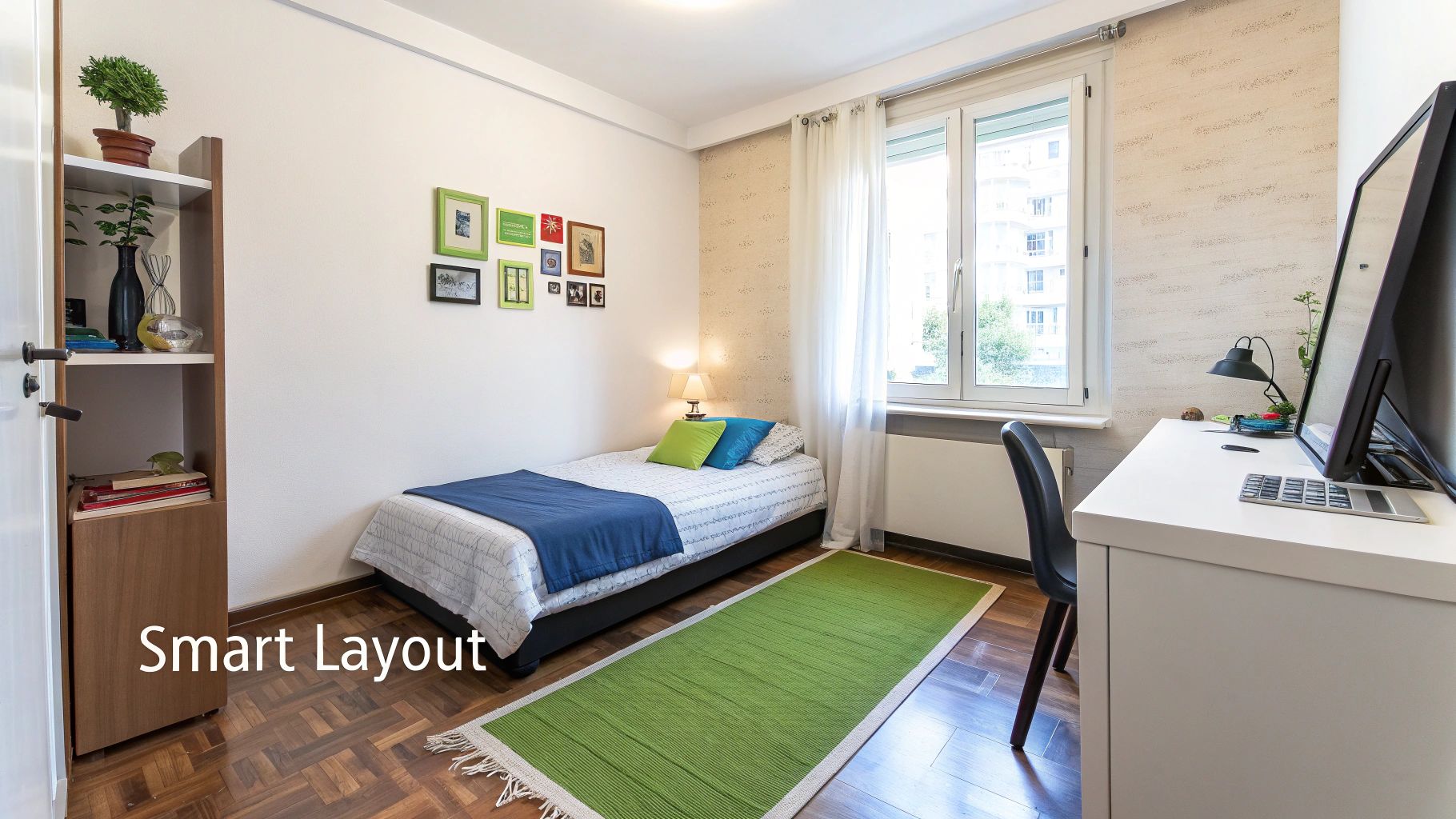
The first thing to think about is your walking path. When you enter the room, can you get to your bed, closet, and desk without doing a weird shuffle around a dresser? This simple test for a clear pathway is non-negotiable for a room that feels orderly and not cramped.
Before you start shoving furniture around, find your anchor. In almost every bedroom, this is the bed. Try placing it against the longest solid wall in the room. This simple move often makes the whole space feel bigger because it establishes a clear focal point and frees up valuable floor space.
Creating Zones and Adding Depth
Even in a compact space, you can create distinct "zones" for different activities like sleeping, working, or getting ready. You don't need walls for this; a strategically placed area rug can visually anchor your sleeping area, separating it from the rest of the room.
Mirrors are your secret weapon here. When you hang a large mirror on a wall opposite a window, it bounces natural light all around the room, making it feel brighter and way more expansive. It’s a classic interior design trick for a reason—it creates an illusion of depth that seems to push the walls outward.
For a deeper dive into furniture placement strategies, you can check out our guide on how to arrange bedroom furniture.
Your layout isn't just about fitting furniture; it's about crafting an experience. The goal is to create a space that feels effortless to live in, where function and flow work together seamlessly.
Lighting also plays a huge part in how big a room feels. Ditch the single, harsh overhead light and layer your lighting instead. This approach adds warmth and dimension.
- Task Lighting: Think a small, stylish lamp on your nightstand or a clip-on light for a desk area.
- Ambient Lighting: A tall floor lamp tucked into a corner can cast a warm, inviting glow that softens hard shadows.
- Vertical Lighting: Wall sconces are great because they draw your eyes upward, which enhances the feeling of height in the room.
By thoughtfully arranging your space saving furniture for small bedrooms and applying these layout principles, you can transform your room from just organized into a truly livable and inviting sanctuary.
Your Top Small Bedroom Storage Questions, Answered
Even after you've got a game plan, a few tricky questions always come up when you’re trying to organize a small bedroom. Let's tackle some of the most common hurdles I see people face, especially when it comes to the closet.
What's the Best Closet Tool Besides Great Hangers?
Specialty hangers are a lifesaver for your clothes on the rod, but for everything else? A modular closet system is the single biggest game-changer. These systems are designed to turn a basic closet—you know, the kind with just one lonely rod and a shelf—into a complete storage command center.
You can mix and match components to create the perfect setup with shelves for sweaters, drawers for socks, and hanging rods at multiple levels. It’s hands-down the quickest way to make a builder-grade closet feel like a custom-designed, super-efficient space.
Should I Get a Dresser or Try to Fit Everything in the Closet?
If you want to maximize that precious floor space, the goal is to get everything inside the closet. Getting rid of a bulky dresser can make a cramped room feel dramatically more open and airy. You can easily replace that storage with drawer units or hanging organizers right inside your closet.
But what if your closet is just impossibly small? In that case, a tall, narrow dresser is your best bet. Sometimes called a lingerie chest, this type of furniture uses vertical height to give you storage without eating up a huge footprint.
The real win is clear floor space. If you can make your closet do the work of a dresser, you've conquered one of the biggest challenges in a small room. It's a key principle of using space saving furniture for small bedrooms.
What Do I Do With My Bulky Winter Coats?
Ah, the classic small-closet dilemma. The best approach here is a combination of seasonal rotation and serious compression. When it’s warm outside, pack those heavy coats and chunky sweaters into vacuum-sealed compression bags. You'd be amazed—they can shrink down the volume by up to 75%.
Once they're flattened, slide them under the bed or stash them on that high shelf in your closet. For the one or two coats you need on hand during winter, use sturdy hangers and give them a dedicated spot so they aren't squishing all your other clothes. For even more smart solutions, check out these 8 Genius Tips for Organizing Small Bedroom Spaces.
Ready to finally win the war against closet clutter and reclaim your bedroom? It all starts with having the right tools for the job. At MORALVE, our space-saving hangers are specifically engineered to multiply your closet space instantly.
Explore MORALVE’s collection of innovative hangers and start your transformation today!
Leave a comment