

Storing Winter Clothes: A Complete Guide to Closet Organization

Before you even think about packing anything away, the most critical step is to declutter your winter wardrobe. Tackling this now frees up valuable closet space, prevents pests, stops stains from setting in, and gets rid of any musty odors. You're essentially creating a clean slate for an organized closet, ensuring every piece you store is something you'll actually be excited to pull out next fall.
Conquering Closet Chaos: A Strategy for Seasonal Swaps
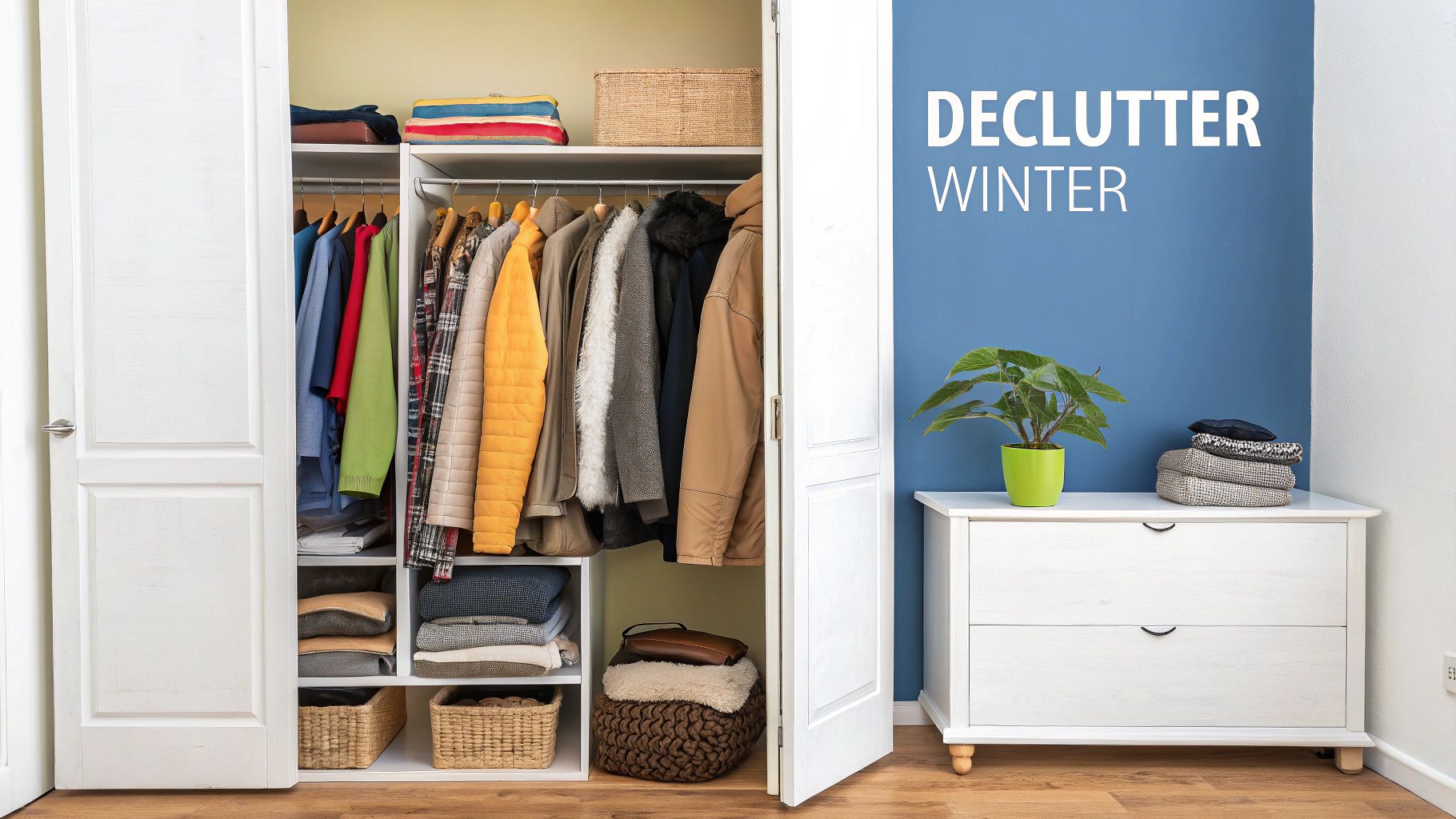
As the weather finally warms up, that annual closet swap can feel like a huge chore. Suddenly, all those bulky coats, heavy sweaters, and winter accessories seem to be taking over your precious closet space. The secret to a smooth transition isn't just about cramming things into storage; it’s about starting with a really good, strategic purge to reclaim your closet.
This isn't just about tidying up. It's an act of taking back control of your closet. By deciding what's worth keeping, you're not only reclaiming space but also building a system that keeps your wardrobe organized all year round.
The Three-Pile Sorting System
To get started, make three distinct piles: Keep, Donate/Sell, and Repair. This simple method forces you to make a clear decision on every single item, cutting out that "I'll deal with it later" habit that just leads to more clutter in your closet.
- Keep: These are your essentials—the items you'll make space for in your organized closet system. They are the pieces you love, wore all the time, and that are still in great shape.
- Donate/Sell: Time for some honesty. If you haven't touched that sweater in two seasons, let it go. Freeing up that hanger or shelf space is more valuable than holding onto something you don't wear.
- Repair: This is for the stuff you love but that needs a little TLC. Think a coat with a missing button or a pilled sweater. The key is to set these aside with a real plan to fix them before they take up space in your off-season storage.
If you're decluttering the whole family's closets, it can feel like a massive project. My advice? Break it down. Tackle one closet at a time, or even just one category—like spending a Saturday morning focused solely on organizing winter coats.
The goal here isn't just to hide your winter clothes. It's to curate a collection that’s clean, functional, and ready to wear. This initial purge is the most important part of keeping closet chaos from creeping back in next year.
Asking the Right Questions
To keep your closet organization on track, ask a few tough questions about each piece. This helps take the emotion out of it and puts the focus on what's practical for your space. For example, when you’re holding up that chunky knit sweater, ask yourself:
- Did I even wear this last winter?
- Does it still fit well and make me feel good?
- Is it starting to look worn out beyond repair?
- Is it worth the closet space it occupies?
This kind of thinking is a lifesaver, especially if you're working with a small closet in an apartment where every inch counts. Just think—getting rid of a few bulky sweaters you never wear could free up an entire shelf for better organization.
Ultimately, this whole decluttering phase is your chance for a complete closet reset. It guarantees that every single piece you store is a truly valuable part of your wardrobe, making your closet a more functional and organized space.
Getting Your Winter Wardrobe Ready for Hibernation
Once you’ve decluttered your winter gear, it’s time to prep everything for its long nap. Tossing clothes directly into storage bins is a mistake I see all the time—and it’s a recipe for disaster. Bodily oils, sweat, and those tiny, invisible food stains that seem harmless now are a magnet for pests. Over a few months in a dark bin, they can become permanent.
Think of this part as a small investment in the future of your wardrobe. A little bit of care now means that when you pull out your favorite sweater next fall, it’s fresh and ready to go, not a musty, moth-eaten mess. It’s the most critical part of storing winter clothes the right way.
Clean Everything—No Exceptions
Every single item needs to be cleaned before it gets packed away. Yes, even that sweater you only wore for an hour. This is non-negotiable for keeping your closet and storage areas pest-free. Pests like clothing moths absolutely love natural fibers like wool and cashmere, but they're especially drawn to areas soiled with skin cells, sweat, and food particles.
- For Machine-Washable Gear: Check the care labels on your parkas, fleece jackets, and cotton base layers. When it comes to down jackets, I always use a gentle cycle with a down-specific detergent to protect the loft. A great trick is to toss a few wool dryer balls or clean tennis balls in the dryer—it helps fluff the down right back up.
- For Delicate Knits: Wool and cashmere need a gentler approach. I always hand-wash these in cool water with a detergent made for wool. Instead of wringing them out, which can stretch the fibers, just gently squeeze out the excess water. Lay them flat on a towel to dry, making sure they’re out of direct sunlight or heat to avoid any shrinking or warping.
- When to Call the Pros: Heavy wool coats, tailored blazers, or anything with that "dry clean only" tag is best left to the professionals. A good dry cleaner will get rid of any deep-set dirt or odors, leaving your items perfectly prepped for storage.
Make sure every single piece is 100% dry before you pack it. Seriously. Even a tiny bit of dampness will lead to mildew and a musty smell that is nearly impossible to get rid of later.
Take Care of Minor Repairs and Upkeep
Now is the perfect time to tackle those small fixes you’ve been putting off. It’s so much easier to sew a loose button or de-pill a sweater now than on the first chilly morning of the year when you’re rushing to get dressed. Making this a part of your storage routine is a total game-changer for maintaining an organized wardrobe. For more tips like these, check out our complete guide to storing off-season clothes.
I like to keep a small repair kit handy with needles, a few basic colors of thread, a seam ripper, and some spare buttons.
Quick Pre-Storage Fixes to Tackle:
- Secure Loose Buttons: Go over your coats, cardigans, and trousers. If a button feels wobbly, reinforce it now. It takes just a few minutes and saves you the headache of finding a matching button down the road.
- De-Pill Your Sweaters: Those annoying little fuzzballs can make a great sweater look old. A fabric shaver or sweater comb works wonders to gently remove pills and make your knitwear look new again.
- Check Your Zippers: Run the zippers on your jackets and boots up and down to make sure they're moving smoothly. If one gets stuck, try rubbing the graphite from a pencil along the teeth—it’s a simple trick that often does the job.
Don't Forget Your Boots and Accessories
Your boots, shoes, hats, and scarves need love, too. If you just toss them in a box, you risk coming back to cracked leather, misshapen hats, and a tangled mess of scarves—all of which create clutter.
For leather and suede boots, a good cleaning is the first step. Use a specialized brush to get rid of any dirt and, more importantly, salt stains, which can cause permanent damage if left untreated. Once they are completely dry, apply a quality leather conditioner or suede protector. This keeps the material moisturized and supple, preventing it from cracking during the warmer months.
As a final touch, stuff your boots with acid-free paper or boot shapers. This helps them hold their shape and stops them from creasing at the ankle. By putting in this little bit of effort, you're not just storing your winter clothes—you're preserving them for many seasons to come.
Choosing the Right Storage Solutions for Your Space
Once your winter wardrobe is clean and mended, it's time for the strategic part: deciding how and where you’re going to store everything to maximize your closet organization. The right choice does more than just tuck your clothes away. It protects your investment, frees up precious closet space, and makes the seasonal switch back in the fall a breeze.
Not all storage methods are created equal, especially when closet real estate is at a premium. A delicate cashmere sweater has very different needs than a rugged ski jacket, and your storage approach should reflect that.
This little flowchart is a great visual for the simple gut-check every piece of clothing needs before it gets packed away.
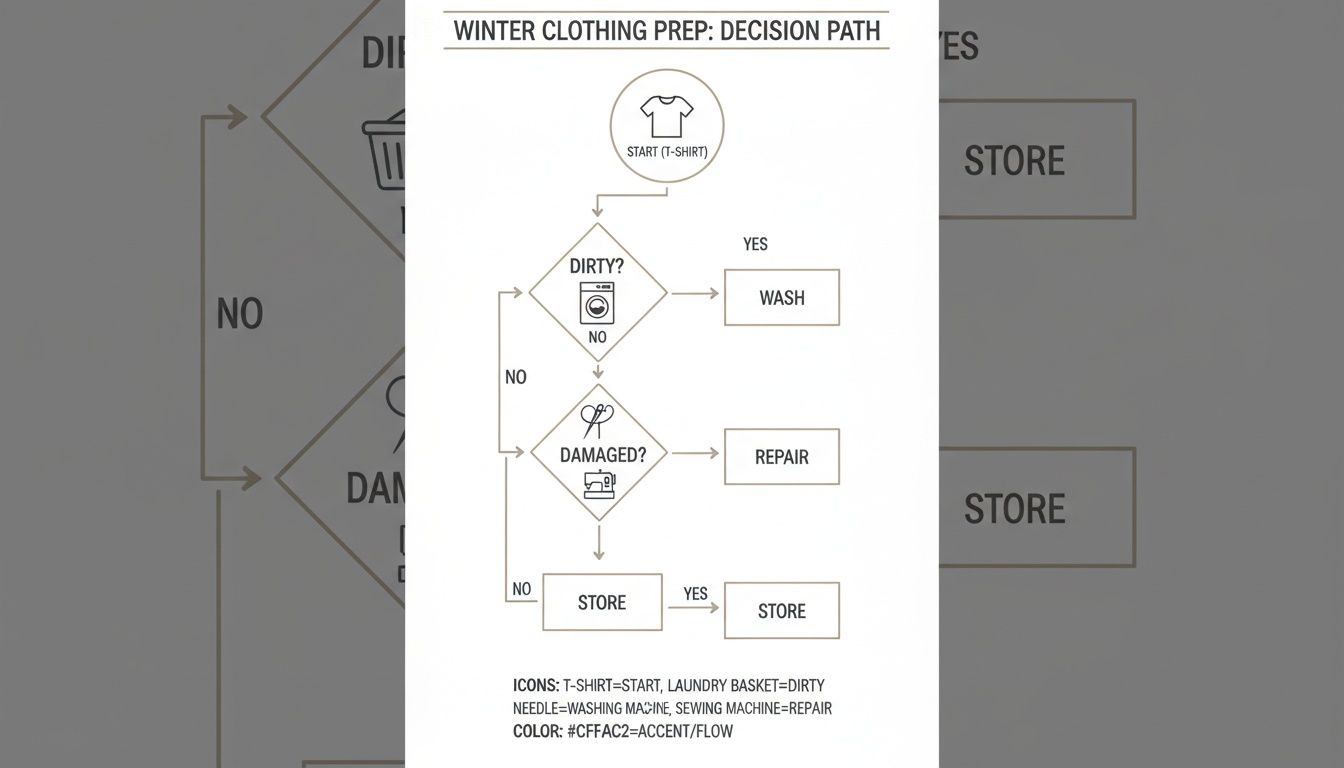
It’s a simple reminder: always inspect for dirt and damage first. Trust me, it prevents so many headaches down the line.
Bins, Bags, and Hangers: Picking Your Closet Arsenal
Every home and wardrobe is different, so what works for one person might not be the best fit for another. Here's a quick rundown of the heavy hitters in closet organization, helping you weigh the pros and cons for your specific needs.
Comparing Winter Clothes Storage Solutions
| Storage Method | Best For | Pros | Cons |
|---|---|---|---|
| Breathable Fabric Bins | Natural fibers like wool, cashmere, and merino knits. | Perfect for closet shelves; allows air circulation, preventing mustiness. Lightweight and flexible. | Offers less protection from pests and moisture compared to plastic. |
| Airtight Plastic Bins | Durable outerwear, synthetic-fill parkas, ski pants, and fleece. | Great for under-bed storage; excellent protection against dust, pests, and water. Stackable. | Can trap moisture if items aren't 100% dry, leading to mildew. |
| Vacuum-Sealed Bags | Bulky synthetics, blankets, and durable fleece. | Unbeatable for maximizing closet space; drastically reduces volume. | Can crush delicate fibers (wool, down) and cause permanent wrinkles. |
| Vertical Hanging | Heavy coats, wool trousers, blazers, and skirts. | Keeps garments ready to wear and utilizes closet rod space efficiently with the right tools. | Can take up significant closet rod space without specialized hangers. |
Ultimately, the best strategy is often a mix-and-match approach, using different solutions to organize different parts of your wardrobe and closet.
Bins and Containers: Breathable vs. Airtight
Storage bins are an organizer's best friend, but it's crucial to know the difference between fabric and plastic to best utilize your closet space.
Breathable fabric bins are your go-to for anything made from natural fibers—think wool and cashmere. These materials need to "breathe" to stay fresh. They are perfect for stacking on high closet shelves, keeping your delicate knits safe and accessible.
On the flip side, airtight plastic containers are absolute champions for your heavy-duty outerwear and are ideal for under-bed storage. Ski pants and fleece jackets don’t need to breathe. What they do need is serious protection from dust and insects, especially if they're living outside the main closet. Just make double-sure every single item is bone-dry before you snap that lid shut.
The Truth About Vacuum-Sealed Bags
I get it. The appeal of shrinking a mountain of puffy coats into a single, tidy brick is hard to resist when you're short on closet space. For some items, vacuum bags are a fantastic space-saving tool. Synthetic-fill jackets and fleece blankets can be compressed without much issue.
But, a word of caution for your natural fibers. The intense pressure from vacuum-sealing can crush delicate wool and cashmere, leaving behind deep wrinkles. For your down-filled coats, that compression can damage the feathers, permanently reducing their loft and ability to keep you warm next winter.
Pro Tip: If you absolutely must use vacuum bags to save closet space, don’t suck all the air out. Leave a little bit of give in the bag. You'll still save a good amount of space, but you won't be putting the garment's structure at risk.
Unlocking Vertical Space with Smart Hanging Solutions
While folding is perfect for sweaters, many of your best winter pieces—like heavy wool coats and trousers—need to be hung. The problem? They're bulky and can devour closet space. This is where thinking vertically becomes a total game-changer for closet organization.
Efficient storage is more critical than ever. The global winter wear market is projected to skyrocket from USD 330 billion in 2023 to USD 490 billion by 2033. For the average city-dweller with a compact closet and 40+ winter pieces, that creates a serious storage crunch. This is where innovative solutions like MORALVE’s space-saving hangers come in. Their cascading design lets you hang multiple garments in the footprint of one, effectively tripling your closet capacity and restoring order.
Using the right hangers is the foundation of a smart hanging strategy:
- Tiered Skirt Hangers: A single hanger can neatly hold several wool skirts, keeping them perfectly straight and maximizing vertical rod space.
- Cascading Pant Hangers: Hang multiple pairs of heavy wool trousers from one compact unit. This not only prevents wrinkles but also frees up a massive amount of closet real estate.
These kinds of hangers are perfect for stashing off-season clothes in a guest room or at the back of your own closet. Everything stays visible, wrinkle-free, and organized. As you explore options, it's worth checking out the latest trends in storage homeware to find functional pieces that also look great. By building a system tailored to your clothes and your closet, you create an organized space that truly works for you.
Getting Your Folding and Hanging Strategy Right
How you put your clothes away for the season is just as critical as where you store them. A beautiful knit sweater can be ruined by permanent creases from a bad fold, or a favorite wool coat can get stretched-out shoulders from a flimsy hanger. Taking a few moments to get this part right keeps your closet organized and your clothes in perfect condition.
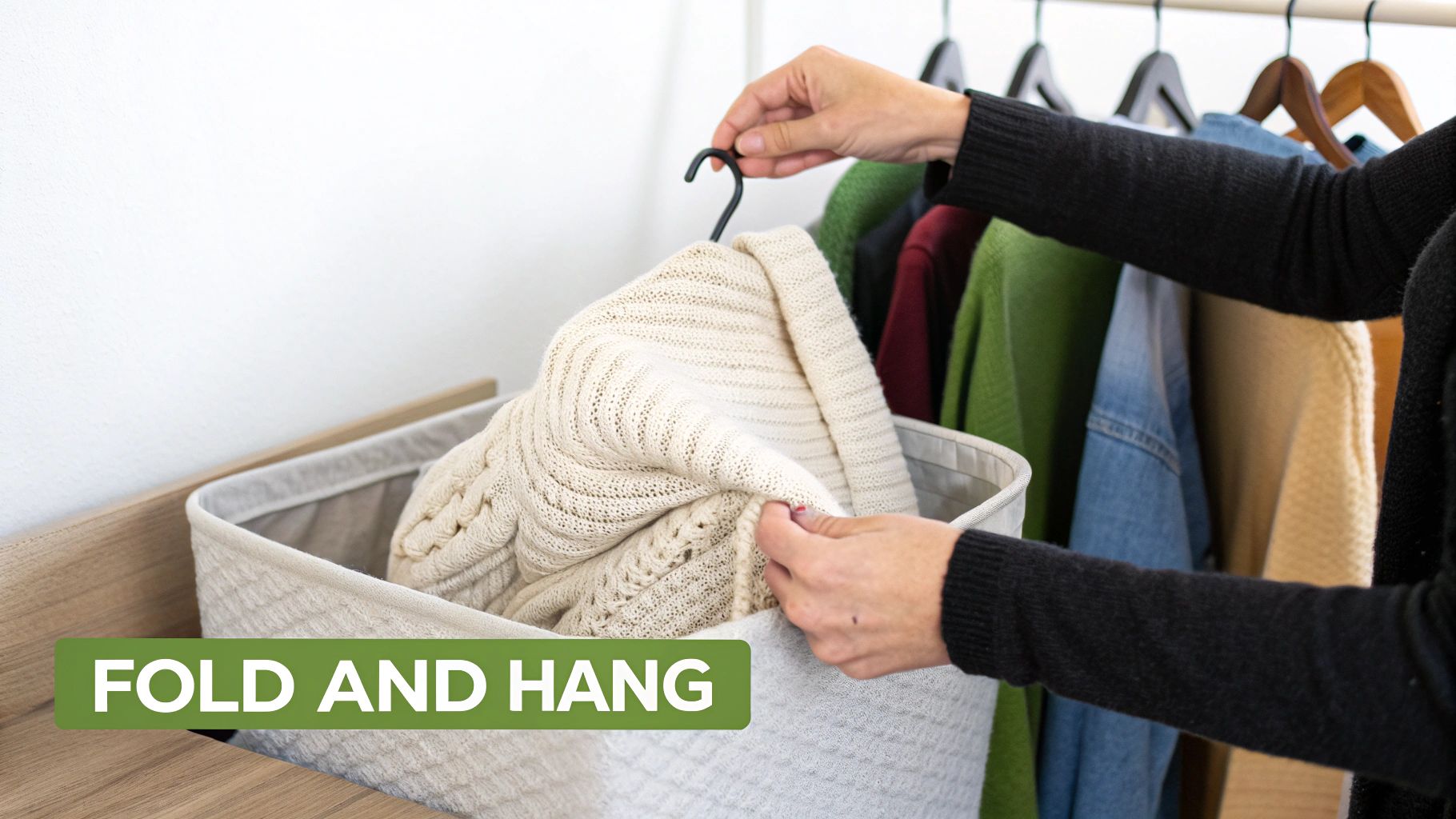
This isn't just about tidiness; it’s about protecting your investment and maintaining an orderly closet. A sweater that's folded with care or a coat that's properly supported will maintain its shape and fit for years.
To Fold or To Hang? That is the Question
The first call you need to make for closet organization is whether an item belongs folded on a shelf or hung on the rod. For winter clothes, this decision is pretty simple and comes down to the fabric's weight and structure.
- Always Fold: Your sweaters, heavy knits, and anything made from wool or cashmere belong in a neat pile on a shelf or in a drawer. Gravity is the ultimate enemy of knitwear. Hanging puts relentless strain on the shoulder seams, which inevitably leads to stretching and sagging.
- Always Hang: Items with a defined shape—like wool coats, blazers, tailored jackets, and trousers—should always be hung. Folding these pieces can press in sharp, stubborn creases that are a nightmare to steam out later.
Here's my rule of thumb for closet organization: If it has a loose, stretchy weave, fold it. If it has a tailored shape with seams designed to hold a specific form, hang it.
The Art of Folding Bulky Sweaters
When it comes to folding sweaters, your goal is twofold: minimize creases and maximize closet space. My go-to method is file folding. Instead of creating a wobbly tower of sweaters, this technique lets you arrange them vertically in a bin or drawer, like files in a cabinet.
It’s a game-changer for organization. Here’s how you do it:
- Lay the sweater face-down on a flat surface.
- Fold each sleeve straight in, creating a clean rectangle.
- Fold the bottom third of the sweater up.
- Then, fold it in half one more time.
The result is a compact little package that stands on its own. You can see every single sweater at a glance, which means no more digging through a messy pile. For a more detailed walkthrough, you can learn exactly how to fold sweaters to save space in our dedicated guide.
Why the Right Hanger Matters for Winter Coats
For anything that gets hung, the hanger you choose is absolutely everything for your closet's health. Please, do not use those thin wire hangers for your heavy winter coats—it’s a recipe for disaster. They create those awful, pointy puckers in the shoulders and offer zero support.
Think of hangers as the support system for your clothes. For heavy winter coats, you have to invest in sturdy, structured hangers made from wood or thick, molded plastic. Look for a wide, contoured shoulder shape; it's essential for distributing the coat's weight evenly.
Let's face it, our closets are more crowded than ever. The global winter clothing market hit a staggering USD 300 billion in 2023, and it's only expected to keep growing. This translates to more bulky items crammed into our closets.
This is where multi-garment hangers become a lifesaver for closet organization. Instead of one hanger for one pair of wool trousers, a tiered hanger can hold four or five pairs in the same amount of vertical space. It’s a simple swap that can instantly reclaim a huge chunk of your closet rod, making room for all those essential coats and jackets without crushing them.
A Smart Approach to Winter Accessories
Don't let your hats, gloves, and scarves become chaotic closet clutter. Just tossing them into a box creates a tangled mess. A little bit of organization here goes a long, long way.
- Hats: Fold beanies and store them in a small, dedicated bin on a closet shelf. For structured hats, stuff the crown with acid-free tissue paper and place them in a larger box where they won’t get squished.
- Gloves and Mittens: Keep pairs together! Tuck one glove inside the other and store them in a drawer with dividers or in a small fabric bin.
- Scarves: The best way to store scarves is to loosely roll or fold them. An over-the-door organizer or a clear container on a shelf works perfectly. Avoid hanging heavy knit scarves, as their own weight can cause them to stretch out.
Keeping Your Clothes Safe from Pests, Moisture, and Odors
You’ve invested time and money in your winter wardrobe and organized your closet. The last thing you want is to open a storage bin next fall and find your favorite sweater musty, mildewed, or, worst of all, full of tiny holes from pests.
Properly protecting your garments is the final, crucial step in putting them away for the season. This isn't just about preventing nasty surprises; it’s about creating a safe haven for your clothes, preserving their fabric and extending their life for years to come.
Location, Location, Location: Choosing the Right Spot
Where you stash your clothes is just as important as how you pack them. The perfect storage environment is cool, dark, and dry. This trifecta is your best defense against moisture, color fading, and pests.
Many of us automatically think of the attic or basement, but these are often the worst places for clothes.
- Attics can have extreme temperature swings, which can damage delicate fibers.
- Basements are often damp, creating a paradise for mold and mildew.
A spare closet in your main living area, a sealed container slid under a bed, or a high shelf in a climate-controlled room are much safer bets. A well-organized closet is the ideal storage spot. If you need more space, a guide to climate controlled storage units is a great resource for ultimate protection.
Natural Pest Control That Actually Works
It’s time to ditch the chemical-heavy mothballs. They leave behind a pungent smell and their fumes can be harmful. Natural alternatives are safer, smell amazing, and work just as well to keep your closet and storage bins pest-free.
Pro Tip: Pests are drawn to natural fibers, especially if they have any lingering traces of food or sweat. This is another reason why washing every single item before storing it is a non-negotiable rule.
Here are a few of my go-to natural deterrents to tuck into your storage bins and garment bags:
- Cedar Blocks or Balls: Cedar has natural oils that moths can't stand. Toss a few blocks into each container or pop cedar rings over the hooks of hangers in your closet.
- Lavender Sachets: The lovely scent of lavender is a powerful moth repellent and leaves your clothes smelling subtly fresh.
- Dried Herbs: Small sachets of rosemary, mint, or cloves also do a fantastic job of keeping pests away.
These simple additions create a protective barrier without any harsh chemicals. For more great ideas, check out our guide on how to keep clothes fresh in storage.
Fighting Off Moisture and Musty Smells
Even in a room that feels perfectly dry, hidden humidity can be a silent threat. Trapped moisture is the number one cause of mildew and that unmistakable musty odor.
A few easy additions can make a world of difference. You know those little silica gel packets that come in new shoe boxes? They are fantastic at absorbing excess moisture. You can buy them in bulk online and toss a handful into each bin.
This little trick is a game-changer, especially if you live in a humid climate. It’s a simple, inexpensive way to ensure your winter clothes emerge from storage fresh, clean, and ready for the first cold snap.
Still Have Questions About Storing Winter Clothes?
Even after you've got a game plan for closet organization, a few tricky questions always seem to come up. Nailing these little details is what separates a well-preserved wardrobe from a disorganized mess come fall.
Let's dive into some of the most common dilemmas people run into, from wrestling with bulky sweaters to figuring out what to do with those giant winter boots.
Is It Better to Fold or Hang Sweaters?
For long-term storage and good closet organization, the answer is clear: fold your sweaters. I've seen too many beautiful, expensive knits ruined by months on a hanger.
Hanging puts all the weight of a heavy wool or cashmere sweater right on the shoulders. Gravity is relentless, and over time, it will stretch the fibers and leave you with those dreaded shoulder bumps.
The best way is to fold them gently and stack them in a breathable bin on a closet shelf. If you're absolutely out of shelf space and must hang a sweater, learn the "drape" trick. Fold it in half vertically, then drape the body and sleeves over the bar of a padded hanger. This method distributes the weight much more evenly.
Are Vacuum-Sealed Bags a Good Idea for Winter Coats?
They can be a great tool for closet organization, but you have to know which coats to put in them. Vacuum bags are fantastic for your big, puffy parkas and jackets filled with synthetic materials. They shrink down, saving a ton of closet or under-bed space.
However, I'd strongly advise against using them for your natural-fiber coats, like wool or cashmere. The extreme compression can crush the delicate fibers, creating permanent wrinkles. The same goes for down-filled coats—squeezing them for months can break the feathers and ruin their ability to keep you warm.
Pro Tip: If you do use vacuum bags to save space, don’t suck 100% of the air out. Leave a little bit of loft inside. This gives the fabric some room to breathe while still saving you a ton of space.
What’s the Right Way to Store Winter Boots and Shoes?
Your boots take a beating all winter, so they need a little TLC before going into hibernation. Getting this right is key to making them last for years and keeping your closet organized.
First, always clean them thoroughly. Once they are spotless and completely dry, stuff them with acid-free paper or proper boot shapers to help them keep their shape.
Never, ever store them in sealed plastic bags. Instead, put them back in their original boxes or dedicated fabric shoe bags and place them on a closet floor or a low shelf, away from direct sunlight.
How Can I Actually Maximize My Closet Space?
This is the ultimate closet organization challenge. Winter clothes are just so bulky. It's no surprise when you see the numbers—the global market for winter wear hit an incredible USD 343.87 billion in 2023, and it's only getting bigger. You can read more about these trends in this Grand View Research report. That translates to a lot of puffy coats and chunky knits crowding our closets.
The secret to winning this battle is to think vertically.
- Go for Tiered Hangers: A single cascading hanger can hold several pairs of wool trousers or skirts, instantly freeing up precious rod space.
- Look Up: Is there empty space above your closet rod? That’s prime real estate for another shelf where you can stack labeled bins of off-season clothes.
- Use Your Doors: An over-the-door organizer is a game-changer for corralling all your hats, scarves, and gloves, keeping them out of the main closet area.
It’s all about making every inch of your closet work smarter for you. You don’t need more space; you just need to use it more effectively.
Ready to conquer closet chaos for good? The right tools make all the difference. MORALVE offers a range of space-saving hangers designed to double your closet capacity and keep your clothes perfectly organized. Transform your space by visiting https://moralve.com and discover a smarter way to store.
Leave a comment